
Heating Services
Reliable heating installation, servicing and repairs for homes and businesses.
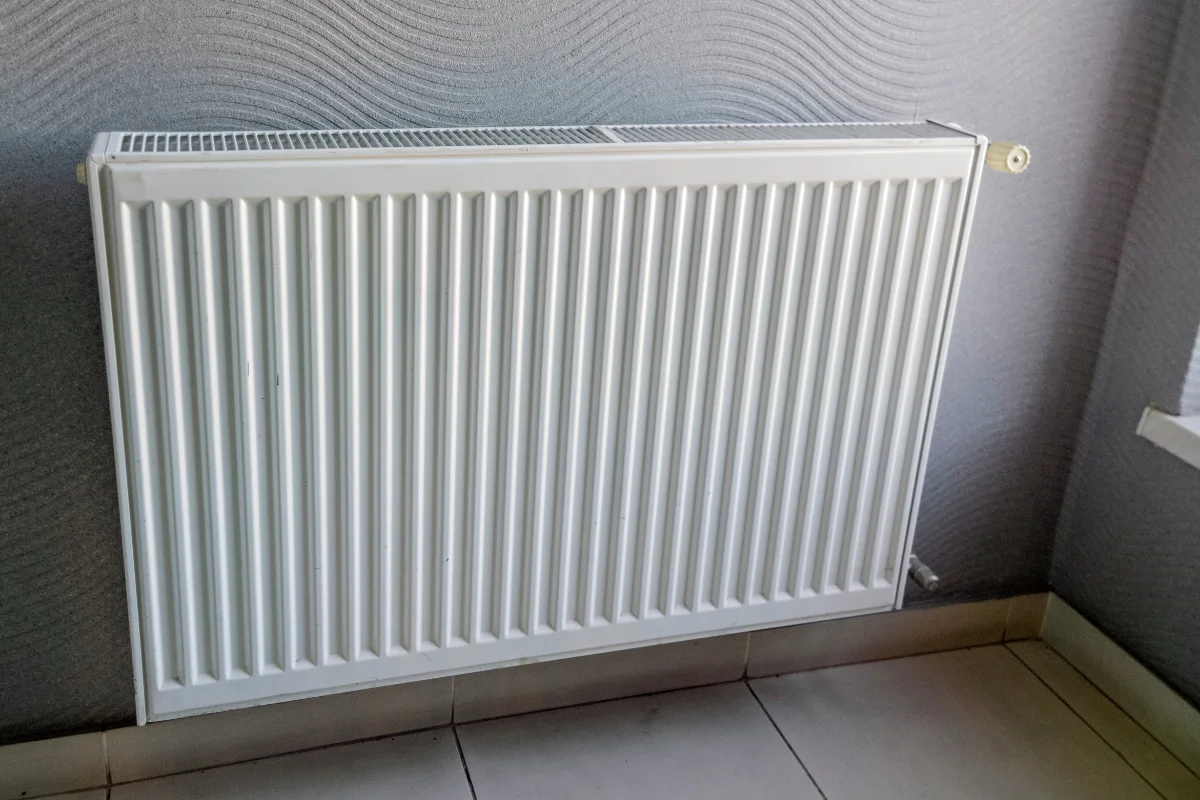
What we offer
Our qualified engineers handle everything from boiler swaps and radiator upgrades to full heating-system design. We diagnose faults quickly, recommend the right fix, and keep disruption to a minimum.
Most homes and small commercial buildings around Newbury and Thatcham run on mains gas, and that is where the bulk of our heating work sits: boiler replacements, control upgrades, system faults and heating design for extensions. Properties off the gas network — parts of Chieveley, Kintbury and the Lambourn valley — often run bulk LPG instead, which behaves similarly but needs different injectors, burner pressures and tank arrangements. Whichever fuel you have, the first visit is a survey. We look properly at what the existing system is doing before deciding what ought to replace it.
Combi or cylinder is the decision that comes up most often, and it turns on the incoming water main rather than on the boiler. A combi fed by a weak main will disappoint no matter how large its output, so we measure the cold flow rate at the kitchen tap before recommending anything. One bathroom and a healthy main suits a combi. Two or more bathrooms, or showers running at the same time, usually points to a system boiler and a cylinder. Where an existing cylinder is sound and well insulated, keeping it is often the right answer.
Controls are where installed efficiency is quietly thrown away. Building Regulations Part L sets a minimum for boiler replacements in England: time control and a room thermostat, plus one efficiency measure — weather compensation, load compensation, flue gas heat recovery, or a smart control with automation and optimisation. Given the choice we would rather fit weather compensation with an external sensor than an app that simply switches the same fixed flow temperature on and off. Zoning, thermostatic valves on the rooms that need them, and a realistic setback pattern do the rest.
Condensing boilers only condense when return water is cool enough — broadly below the mid-fifties in Celsius — and a system driven flat out at eighty rarely gets there for long. Dropping the flow temperature recovers genuine efficiency, but only if the emitters can still meet the heat loss on a cold morning. We calculate heat loss room by room, check radiator output at the lower flow temperature, and upsize the two or three that fall short rather than replacing every emitter in the house. Balancing the circuit afterwards matters as much as the radiators themselves.
Water quality decides how long a system lasts. Much of West Berkshire sits on chalk, so scale is part of the picture alongside the magnetite sludge that steel radiators produce as they corrode. BS 7593 sets out the regime: clean the system, fit an in-line magnetic filter, dose corrosion inhibitor, then actually test the inhibitor concentration each year rather than assuming it is still there. Cold radiator bottoms, a pump that has failed twice in three years, or a boiler that overheats briefly and then settles are circulation symptoms, and replacing the boiler without addressing them simply moves the problem along.
Stored hot water brings requirements of its own. An unvented cylinder is a pressure vessel: it needs an expansion arrangement, two independent safety devices and a discharge pipe run to a safe, visible position, and the work is notifiable under the Building Regulations. Sizing should follow the household's peak draw-off rather than a bedroom count, and a secondary return or a trace-heated dead leg is what stops a long pipe run running cold at the tap. Those safety devices want checking annually alongside the boiler, which is the visit where a tired expansion vessel gets caught early.
- Gas and LPG boiler replacement — combi, system and open-vented
- Annual boiler servicing, safety checks and fault diagnosis
- Radiator sizing, upgrades and full system balancing
- Controls, zoning and weather compensation to Part L
- Power flushing, magnetic filters and BS 7593 water treatment
- Unvented and vented hot water cylinders
- Heating design for extensions and refurbishments
Common questions
- How long does a boiler replacement take?
- A like-for-like combi swap in the same position is normally one working day, including flushing and commissioning. Converting an open-vented system to a sealed one, moving the boiler to a different wall, or removing a cylinder and loft tanks usually runs to two or three days. Rerouting gas or flue pipework adds time. You get the expected programme in writing before anything is disconnected.
- Our water pressure is poor — what are the options?
- First we establish whether the problem is pressure or flow rate, because they are different faults with different answers. A weak flow rate rules out a combi, and often an unvented cylinder too. From there the options are a booster and accumulator arrangement where the incoming supply allows, or keeping a vented cylinder fed from a tank. Occasionally the restriction is an old undersized supply pipe that can simply be upgraded.
- Why does my boiler pressure keep dropping?
- Almost always a small leak or a failed expansion vessel. Leaks show up at radiator valves, towel rails, or under floors where pipework has been disturbed. If there is no visible water, the vessel has usually lost its air charge, so the pressure relief valve lifts and discharges outside each time the system heats up. Topping up every week hides the fault and adds fresh oxygenated water, which accelerates corrosion.
- My radiators are cold at the bottom — do I need a power flush?
- Cold bottoms usually mean magnetite sludge has settled in the radiator, so a clean of some kind is likely. Whether that means a chemical clean, a full power flush, or removing and flushing individual radiators depends on how widespread it is and how old the emitters are. We take surface temperatures across the system first. On heavily corroded radiators, flushing can expose weak spots and replacement is the more honest recommendation.
- We run on bulk LPG — is that the same as a mains gas system?
- The heating side behaves much the same, but the appliance is not interchangeable. Burner pressures and injectors differ, so a boiler has to be supplied or converted for LPG. The tank, its separation distances and the regulator arrangement sit with your gas supplier. LPG is also heavier than air, which makes siting rules around cellars, drains and low-level openings stricter than they are for natural gas.
- Do I have to upgrade my controls when the boiler is replaced?
- In England, some control work is unavoidable. Part L requires a time control and a room thermostat plus one additional efficiency measure — weather compensation, load compensation, flue gas heat recovery, or a smart control with automation and optimisation. We will explain which of those genuinely suits your property and how you would use it, rather than defaulting to whichever option is quickest to fit.
Related services
Oil Fired Heating
Specialist support for oil-fired heating systems.
Servicing & Repairs
Clear, dependable repairs to get systems back online with minimal disruption.
HVAC Installation
Installations carried out to manufacturer and regulatory standards.
Residential HVAC
HVAC for homes — comfort, efficiency and clear communication.
Talk to an engineer today
Free consultation, fast quotes and 24/7 emergency cover.
Areas We Cover
Heating Services across Newbury, Reading, Basingstoke, Oxford, London and the wider South of England — covering Berkshire, Hampshire, Oxfordshire, Wiltshire, Dorset and Somerset.